


I first heard of Moxie two weeks ago. Specifically, it was in a dialogue between elderly Mrs. Strauss and Jimmy McGill, the protagonist of Netflix’s Better Call Saul (Season 1 Episode 5).
Mrs. Strauss: “Moxie is in such short supply these days.“
Jimmy McGill: “I pride myself on my Moxie.”
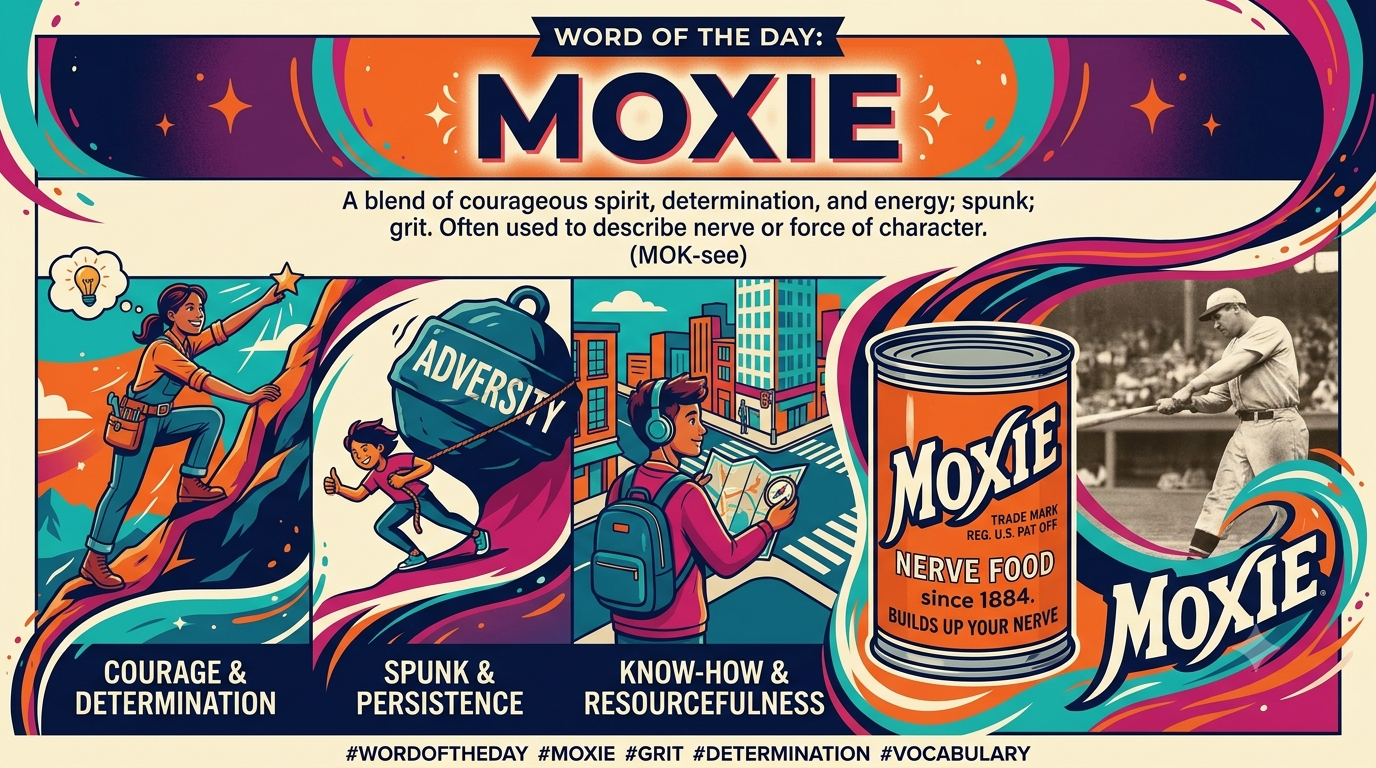
Since I could not interpret the meaning of the word from the context, I paused Netflix and searched for the word online. According to Merriam-Webster’s online dictionary, moxie has three meanings:
1. Energy
2. Courage and determination
3. Know-how
Therefore, recalling the preceding line spoken by Mrs. Strauss, “I knew I’d like you when I saw how you saved the poor man on the television,” the word in this context would most likely refer to “courage and determination.”
However, I am surprised to learn that the meaning of this word is the opposite of what I expected. I thought it was likely related to something fluffy, feathery, dreamy. Admittedly, I guessed without relying on the context, going instead by how the word rolls smoothly off my tongue and how innocuous it looks. MO.XIE. To me, the word sounds and looks the complete opposite of words with an ‘oomph’ such as hard, task, strong, determination. The pronunciation of these words sounds harsh in my ears.
If the word were a person, it would be a young girl with a baby-blue ribbon in her ponytail, a white pinafore with pink trimmings, and a pair of Mary Jane shoes. Of course, you must be thinking I’m going bonkers.
The word first appeared in 1876. Dr. Augustin Thompson from Massachusetts, USA, patented a medicine called “Moxie Nerve Food” which contained an extract from a rare plant. In fact, the medicine promised to help treat “paralysis, softening of the brain, nervousness, and insomnia”.
Over the next few years, Dr. Thompson transformed the medicine into a beverage by adding soda water. Soon after, he was selling the beverage to the mass market as soda fountain syrup. Indeed, the drink is now the oldest bottled soft drink in the US.