
The Call of Gravel
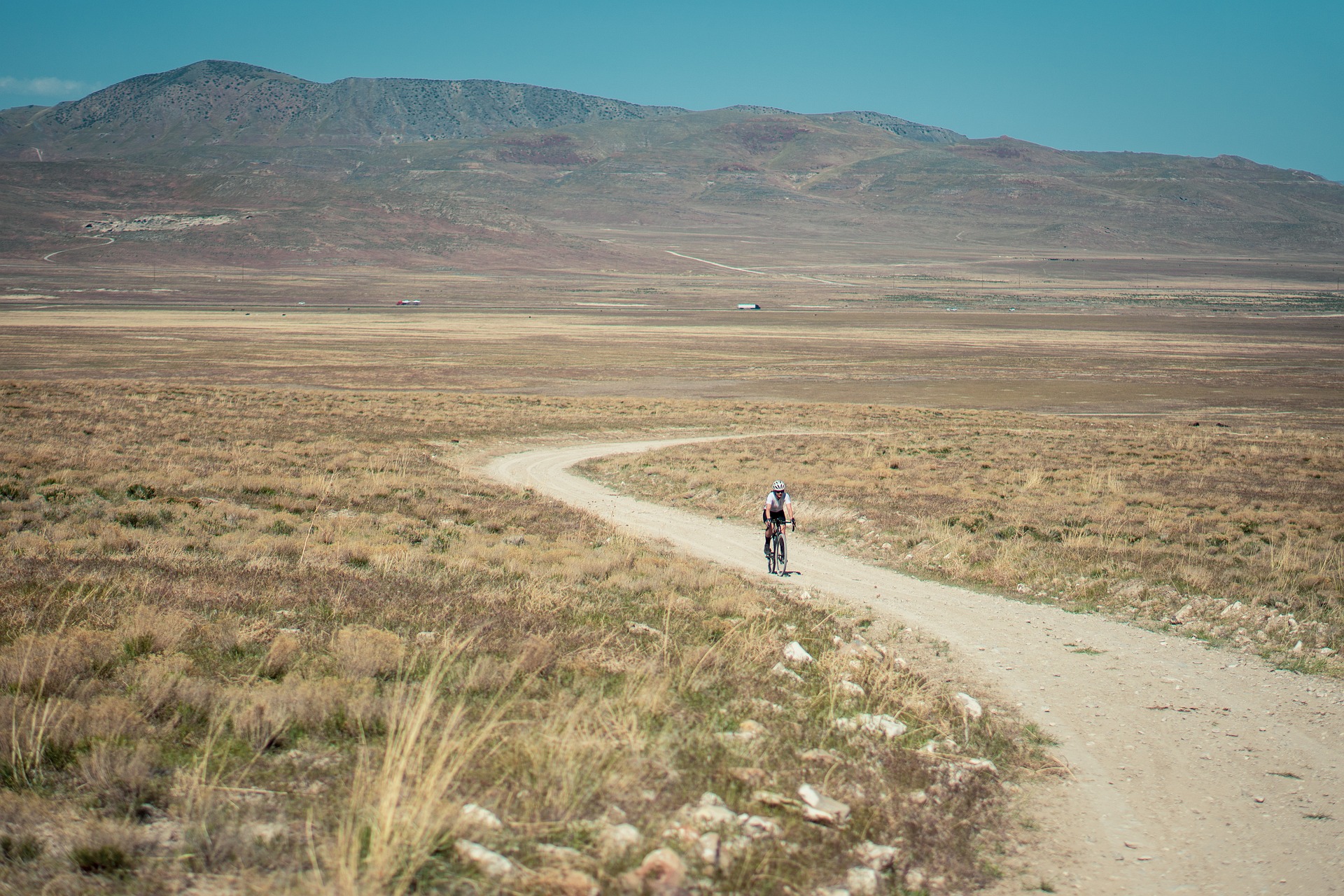
I have decided to buy a gravel bike to replace my 10-year-old road bike. The decision was made after the recent 3-day bikepacking trip I took with my husband. Planning more multi-day trips ahead, I need a more comfortable, versatile bike.
Returning to Liv
That’s the reason why I am now at a Giant store to get a gravel bike. Instead of selecting one of Giant’s unisex gravel bikes, I have set my mind on a Liv model. Both brands are owned by the same parent company, but Liv’s designs cater to women. Incidentally, my current road bike is a Liv.

Fish Out of Water
I don’t feel as comfortable in a cycling store as in a running store. In a running store, I usually know what I want and what suits me. If I do have any queries, I do not have any qualms about asking the salespeople. By contrast, stepping into a cycling shop is a different story. I don’t know anything about cycling except knowing how to push the pedals. After all, it has always been my husband who handles the nuts and bolts.
My First “Serious” Bike
My hesitation dates back ten years to when I bought my first road bike: a Liv Avail 1. Serious, by my definition, means a bike with drop handlebars. Growing up, I was deeply impressed by the sleek aerodynamic shape of cyclists as they flattened their bodies, tucked their heads low between their shoulders, bent their elbows at a 90-degree angle while gripping the drops. That image convinced me real cyclists only ride drop handlebars—a belief that has stuck with me since.
Justifying the Extra Zeros
Here I am at Giant, setting my heart on Liv’s Devote Advanced 2 model, and it costs 5 times more than my road bike! It goes without saying that the extra zeros are used to account for the carbon frame, disc brakes, hydraulic system, wider tires and all the other bells and whistles. At least, that’s what I am trying to convince myself.
Resigned to the cost, I finally tell the salesperson I am ready to buy. He then leads me to a corner of the store. There stands a tall, black fixture made up of a vertical rod with a measuring scale. At the bottom of the rod is a base plate with two footprints stamped on it. The device looks like a typical doctor’s stadiometer. However, it comes with sliding callipers. Directly next to the fixture is a signboard with the words Étude Posturale printed on it.
Enter the Étude Posturale
It is the first time I have come across this term Étude Posturale. I know the meaning of each word—Étude signifies ‘a study’ while Posturale, as in English, relates to posture. So, a study of your posture. Why do I need a posture study just to buy a bike? As it turns out, an Étude Posturale is the process of adjusting a bicycle to match your body measurements.
Like most kids, I learned to ride early, getting a red BMX around age ten. Since then, I have owned a few bicycles, mostly for commuting. But none of the purchases required a bike fit. When I bought my first road bike, the only adjustment was the salesperson asking me to sit on the saddle so that he could adjust the height. Other than that, no further customisation was made.
A Very Formal Five Minutes
Étude Posturale. The use of the word “Étude” makes the bike fitting process seem so formal and proper. It is as if a painstaking and time-consuming investigation needs to be conducted. However, the whole process takes less than five minutes.
Confessions of a Zero-Hour Rider
First, the bike fitter asks me some basic questions: age, weight and the time I spend cycling weekly. That’s when a humorous moment arises. I give him a bashful smile, not knowing how to reply. An honest answer would be between zero and one, on average. For the last ten years in France, I have only cycled during the summer holidays, and just for a few days each time. While I occasionally do indoor sessions on Zwift, averaging everything out will likely give an answer closer to zero than to one.
I turn back to glance at my husband and catch him grinning at my hesitancy in answering. The salesman understands that neither of us can provide a number. In the end, he makes the executive decision and jots down the range of 1 to 2 hours. He must be lamenting to himself that another good bike has just been wasted on a rookie.
Tailored to Fit
Then the salesman asks me to step on the base plate and starts taking measurements. The measurements include inseam, arm length, torso, shoulder width and leg length. With these measurements, the store will adjust the bike’s settings once it’s delivered in September. All I have to do is to come and collect the bike.
The store will also provide me with a copy of my measurements and dimensions of the key bike components. My measurements may be useful for future bike purchases, especially if the stores do not provide complimentary bike fitting services. For reference, a search online shows that a professional bike fit averages between 80 € and 450 €. The cost varies with the depth of analysis required. I am sure the one that I have just done is at the lower end.
Where are the Pedals
As the salesman is processing my order in the system, he drops the question, “Would you like to pick the pedals now or when you collect the bike?”
“What pedals? Can’t I just use the pair that comes with this bike?” I reply, squirming inside as I think of having to spend more.
“The bike doesn’t come with pedals,” my husband chips in.
If I had a mirror in front of me, I would likely see an incredulous expression reflected back at me. How is it possible to buy a bike that doesn’t come with pedals attached? And it’s not a low-end bike to boot! My bike-aficionado husband then hastily explains that riders of mid-range and high-end bicycles often have strong personal preferences for specific pedal systems. As such, bike manufacturers do not include pedals in the bike sale.
No Turning Back Now
My bike fitting measurements are taken and the deposit paid. It will take another three to four weeks before I can get to see the bike. With this bike, I will feel obliged to put in more hours—much more than just the occasional days in the summer holidays. Expect to hear more about my rookie mistakes.